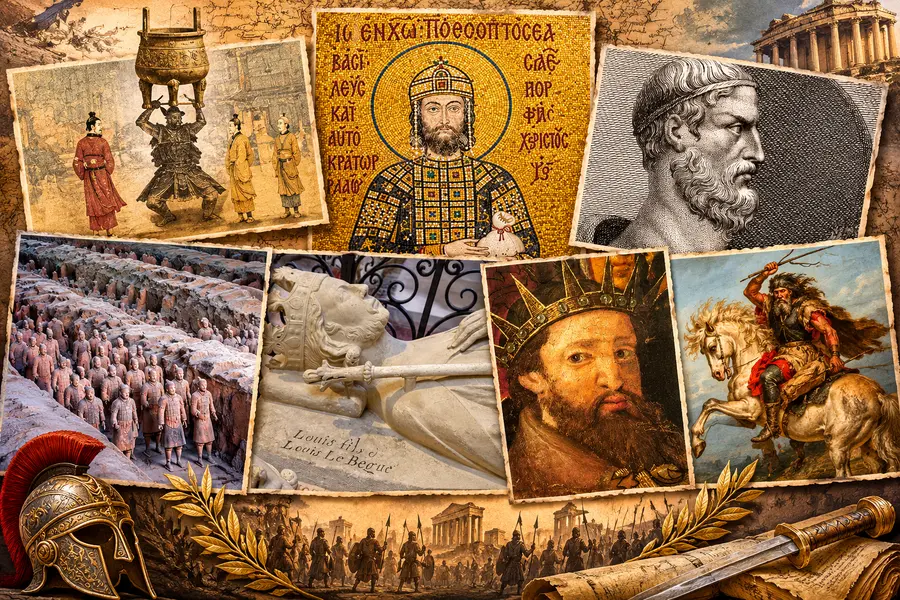
They conquered kingdoms, crushed rebellions, defeated mighty armies, and brought empires to their knees. Yet some of history's most powerful rulers met their end in ways that seem almost too ridiculous to be true. A Greek king who defeated the Romans was struck by a roof tile thrown by an old woman. A Viking earl supposedly died from an infection caused by the tooth of an enemy he had already beheaded. Another ruler drowned in a toilet after executing a man who predicted his death. History remembers these men for their power and military achievements, but their bizarre deaths often make for even more extraordinary stories.
From ancient battlefields to medieval hunting expeditions, here are ten famous kings and military commanders who died in some of the strangest and most ironic circumstances in history. Some accounts come from contemporary chronicles, while others survive through ancient anecdotes and medieval legends. Each reveals how even the most powerful individuals could meet remarkably unexpected ends.
Table of Contents
- Pyrrhus of Epirus - Killed by a Roof Tile
- Frederick Barbarossa - Drowned on His Way to the Holy Land
- Attila the Hun - Died from a Nosebleed on His Wedding Night
- Sigurd the Mighty - Killed by a Dead Enemy's Tooth
- Duke Jing of Jin - Drowned in a Latrine
- King Wu of Qin - Crushed by a Bronze Cauldron
- Louis III of West Francia - Killed by a Doorway
- John II Komnenos - Killed by a Hunting Accident
- Martin I of Aragon - The King Who Laughed Himself to Death
- Qin Shi Huang - The Emperor Who May Have Poisoned Himself Seeking Immortality
- Honourable Mention: Draco of Athens - Smothered by Gifts
Quick Summary: 10 Powerful Rulers and Their Bizarre Deaths
| Historical figure | Year | Unusual circumstances of death |
|---|---|---|
| Pyrrhus of Epirus | 272 BC | Struck by a roof tile thrown by an elderly woman |
| Frederick Barbarossa | 1190 | Drowned while crossing or bathing in a river during the Third Crusade |
| Attila the Hun | 453 AD | Reportedly suffocated after a severe nosebleed on his wedding night |
| Sigurd the Mighty | c. 9th century | Infected by a wound supposedly caused by a dead enemy's tooth |
| Duke Jing of Jin | 581 BC | Fell into a latrine pit and drowned |
| King Wu of Qin | 307 BC | Suffered a fatal injury while lifting a massive bronze cauldron |
| Louis III of West Francia | 882 AD | Fatally injured when he struck a low doorway on horseback |
| John II Komnenos | 1143 AD | Died following an infected wound sustained while hunting |
| Martin I of Aragon | 1410 AD | Popular legend claims he died laughing at his jester's joke |
| Qin Shi Huang | 210 BC | Possibly died from mercury poisoning while pursuing immortality |
| Draco of Athens | Traditionally c. 7th century BC | Legend says he suffocated beneath gifts of clothing |
1. Pyrrhus of Epirus - Killed by a Roof Tile (272 BC)
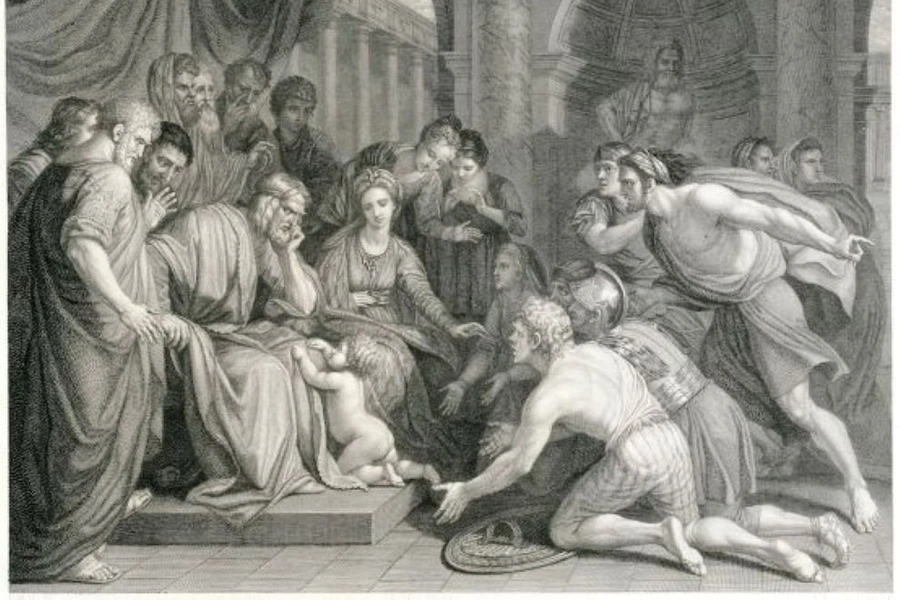
Imagine defeating Roman legions, surviving multiple wars, and building a reputation as one of the finest generals of the ancient world, only to be brought down by a roof tile thrown by an ordinary woman trying to save her son. That was supposedly the fate of Pyrrhus, King of Epirus. Pyrrhus was a formidable Hellenistic commander who fought Rome during its expansion into southern Italy. His victories at Heraclea (280 BC) and Asculum (279 BC) demonstrated his tactical brilliance, although his losses were so severe that they gave rise to the expression 'Pyrrhic victory'. He later campaigned in Sicily and returned to mainland Greece, continuing his struggle for influence among the successor kingdoms of Alexander the Great.
In 272 BC, Pyrrhus marched against Argos, where fighting broke out in the narrow streets. During the chaotic battle, he encountered an enemy soldier and attacked him. The soldier's mother, watching the fighting from a rooftop, feared for her son's life. According to Plutarch's Life of Pyrrhus, the elderly woman lifted a roof tile with both hands and hurled it at the king.
The tile struck Pyrrhus beneath his helmet, crushing the vertebrae at the base of his neck and stunning him. He fell from his horse. An enemy soldier subsequently recognised him and killed him. The story is particularly striking because Pyrrhus had faced Roman armies, elephants, and experienced generals. Yet his final moments were shaped by an ordinary woman desperately trying to save her son. His death remains one of the most extraordinary endings recorded for an ancient military commander.
2. Frederick Barbarossa - Drowned on His Way to the Holy Land (1190)
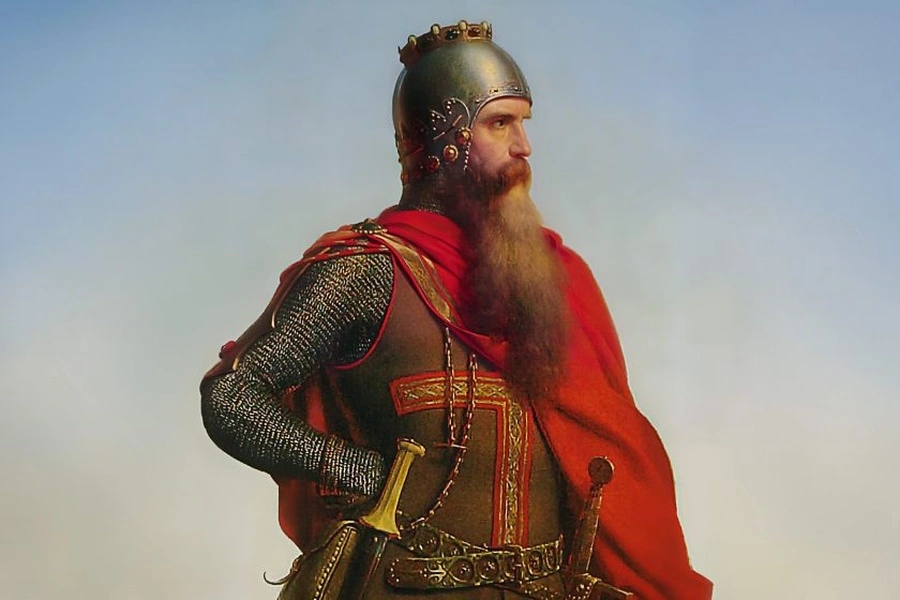
Frederick I, better known as Barbarossa, was one of the most powerful rulers of medieval Europe. As Holy Roman Emperor, he spent decades asserting imperial authority across Germany and Italy. In 1189, he joined the Third Crusade, intending to help recover Jerusalem following Saladin's victories. His army was enormous, and Frederick had already demonstrated his military capability by defeating Turkish forces and capturing Iconium. However, the journey through Asia Minor was exhausting. His soldiers struggled with heat, difficult mountain passes, and shortages of supplies.
On 10 June 1190, the crusading army reached the Saleph River in Cilicia, in present-day Turkey. Frederick drowned in its waters. According to a letter written by someone accompanying the expedition, the emperor had successfully crossed the river but decided to bathe and cool himself after the exhausting journey. He was swept away and drowned.
Other medieval accounts offer different explanations, including the possibility that he was attempting to cross the river on horseback. The familiar image of Barbarossa drowning because his heavy armour dragged him underwater is therefore not established fact. His death created a leadership crisis within the German contingent. Some soldiers abandoned the expedition, while others continued towards the Holy Land under different commanders. Frederick never reached Jerusalem.
For an emperor who had survived decades of political struggles and military campaigns, dying in a river before reaching his destination was an extraordinarily unfortunate end. His death also deprived the Crusade of one of its most experienced leaders, even as Saladin continued to defend his territories.
Source: Fordham University - Letter on the Death of Frederick Barbarossa.
3. Attila the Hun - Died from a Nosebleed on His Wedding Night (453 AD)
Attila was one of the most feared military rulers of late antiquity. As leader of the Huns, he launched devastating campaigns against the Eastern and Western Roman Empires, extracted enormous tribute, and threatened the survival of Roman territories in Europe. His campaigns included invasions of the Balkans and an expedition into Italy in 452 AD. Few rulers inspired as much fear among the Romans as Attila, whose military power rested on highly mobile cavalry forces and the ability to coordinate armies drawn from several subject peoples.
Yet his death in 453 AD was reportedly anything but spectacular. According to the sixth-century historian Jordanes, who drew upon the lost writings of the Roman diplomat Priscus, Attila had recently married a young woman named Ildico. During the wedding celebrations, he drank heavily and eventually retired to sleep. That night, he suffered a severe nosebleed. Lying on his back while intoxicated, he reportedly choked on the blood flowing down his throat.
His attendants discovered his body the following morning, with Ildico beside him. There were no visible signs of violence. Jordanes described the death as an undignified end for a king renowned for war. It is impossible to establish the exact medical cause of Attila's death today. The nosebleed story remains the best-known ancient account, although historians have considered other possibilities. There is something deeply ironic about the story. The man who had brought two Roman empires to the brink of disaster supposedly died during a wedding celebration rather than on a battlefield.
Source: Jordanes, Getica, Chapter XLIX.
4. Sigurd the Mighty - Killed by a Dead Enemy's Tooth (c. 9th Century)
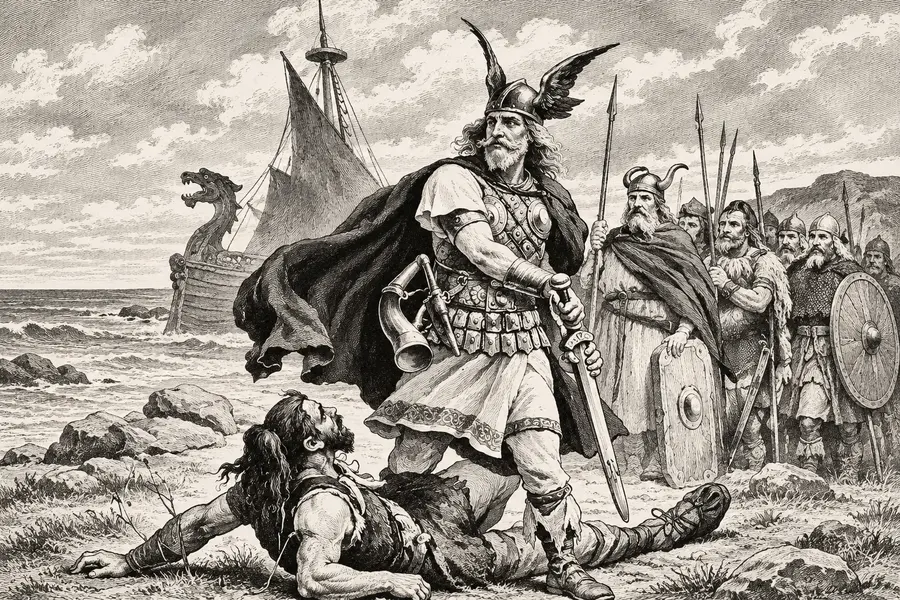
Among the strangest Viking death stories is that of Sigurd Eysteinsson, better known as Sigurd the Mighty, a Norse earl associated with the expansion of Viking power in northern Scotland. According to the Orkneyinga Saga, Sigurd was engaged in a bitter conflict with a Scottish ruler named Máel Brigte, sometimes nicknamed Tooth because of his prominent teeth. The two leaders supposedly agreed to settle their dispute through a battle involving forty men on each side.
Sigurd, however, resorted to deception. He arranged for eighty men to ride on forty horses, effectively doubling his force while pretending to honour the agreement. Máel Brigte recognised the trick but fought regardless. His army was defeated, and he was killed.
Sigurd then ordered the heads of his enemies to be fastened to the saddles of his victorious warriors as trophies. One of these belonged to Máel Brigte. During the journey home, Sigurd reportedly struck his leg against one of the dead man's protruding teeth while riding. The wound initially appeared insignificant. However, it became swollen and infected, eventually killing the victorious earl.
The irony is difficult to overlook. Sigurd had cheated his enemy, defeated him in battle, and displayed his severed head as a trophy. Yet the dead man's tooth supposedly delivered the final revenge. As with many Viking stories, the account should be treated as a saga tradition rather than a medically verifiable historical record. Nevertheless, it remains one of the most memorable stories of revenge from medieval Norse history.
Source: Orkneyinga Saga - Account of Sigurd and Máel Brigte.
5. Duke Jing of Jin - Drowned in a Latrine (581 BC)
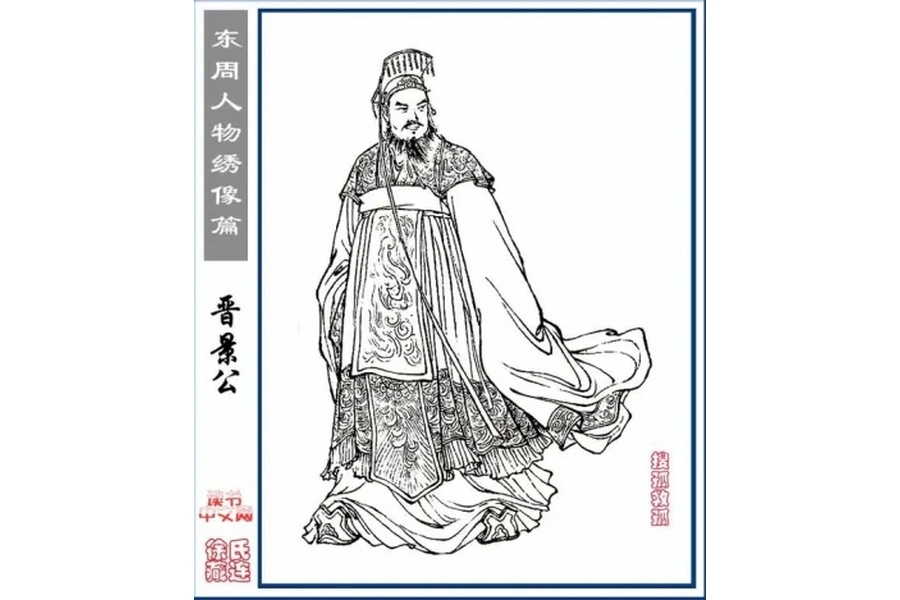
Ancient Chinese history has no shortage of extraordinary stories. Still, the death of Duke Jing of Jin is particularly unusual because it involves a failed attempt to disprove a prophecy. Duke Jing ruled the state of Jin during the Spring and Autumn period. According to the Zuo Zhuan, a shaman once predicted that the duke would not live long enough to eat the next harvest of wheat.
The prediction disturbed the ruler, but he was determined to prove it wrong. When the new wheat was harvested, Duke Jing ordered it to be prepared for a meal. He also summoned the shaman who had made the prediction, showed him the wheat, and ordered his execution. Unfortunately for the duke, he never got to enjoy his meal. Shortly before eating, he developed severe abdominal discomfort and went to the toilet. There, he fell into the latrine pit and drowned.
The same historical account records that a servant later retrieved his body. In an additional twist, the servant was reportedly executed and buried with the duke because of a dream interpreted as a sign that he was destined to accompany his master into the afterlife.
The story is extraordinary not simply because of the manner of death, but because of its timing. Duke Jing had just executed the man who predicted that he would not live to eat the new harvest. His death occurred before he could take even a bite. Whether every detail is historically reliable or not, the account has survived for centuries as an example of fate's unpredictability in Chinese historical tradition.
Source: Zuo Zhuan - Duke Cheng, Year 10.
6. King Wu of Qin - Crushed by a Bronze Cauldron (307 BC)
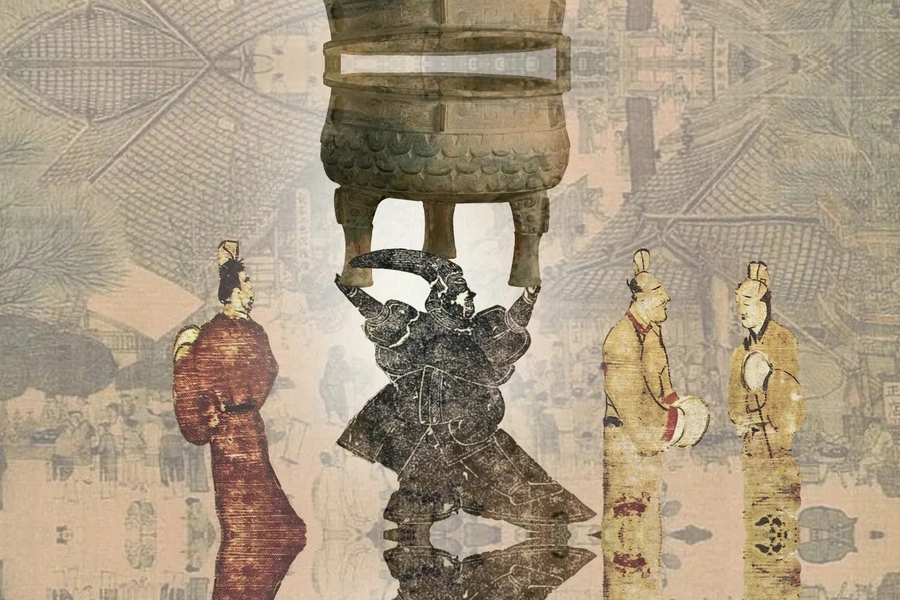
King Wu of Qin was a young ruler with an extraordinary fascination for physical strength. He was particularly interested in wrestling and lifting heavy objects, activities that were associated with prestige and masculine power in ancient China. During a visit to the Zhou royal capital, the king encountered enormous bronze cauldrons associated with the ancient rulers of China. These vessels were not ordinary cooking pots. They were powerful symbols of royal authority and the legitimacy of dynasties.
King Wu decided to demonstrate his strength by attempting to lift one of them. Encouraged by a strongman named Meng Yue, he attempted the extraordinary feat. According to traditional historical accounts, he managed to lift the vessel but suffered a catastrophic injury when it fell or shifted, crushing his leg and breaking the bones. His condition deteriorated rapidly. He reportedly suffered severe internal injuries and died later that night, aged only 23.
The death was particularly consequential because King Wu had no surviving son. His sudden death triggered a succession struggle among members of the Qin royal family, eventually allowing his younger half-brother to become King Zhaoxiang.
Qin would later become the kingdom that unified China under Qin Shi Huang, but its earlier ruler had died trying to demonstrate his physical prowess. It is a remarkable example of how a seemingly harmless personal obsession could have consequences far beyond the individual. The king's strength contest ended his life and unexpectedly changed the course of Qin's succession.
Source: Chinese Text Project - King Wu of Qin.
7. Louis III of West Francia - Killed by a Doorway (882 AD)
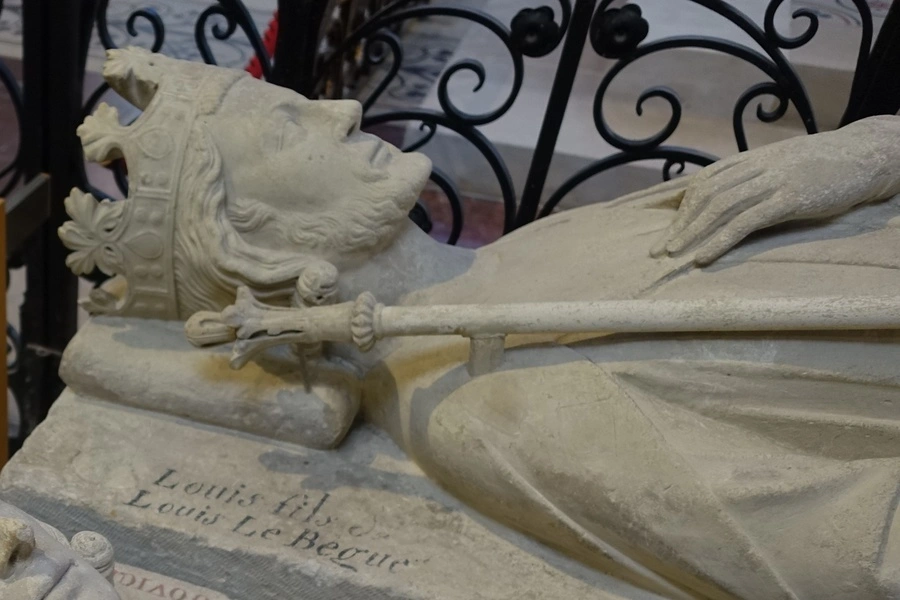
Louis III of West Francia was a Carolingian king who achieved a significant military victory against Viking raiders at the Battle of Saucourt in 881. His victory helped establish his reputation as a capable warrior king at a time when Viking attacks threatened large parts of western Europe. His death, however, was far removed from the battlefield.
According to the Annals of Saint-Vaast, Louis was pursuing a young woman, the daughter of a man named Germund. When she fled into her father's house, the king followed her on horseback. He failed to notice the low doorway and struck his shoulders against its upper section, with his chest also colliding with the saddle. The injuries were severe. Louis was carried away on a litter and eventually died on 5 August 882.
He was only around 18 or 19 years old. His death ended a promising reign and weakened the Frankish response to Viking incursions. His brother Carloman continued ruling, but Louis's military success was difficult to replace. There is something almost unbelievable about the contrast. A king who had successfully fought Viking warriors died because he failed to notice a doorway while riding a horse. The story also serves as a reminder that medieval rulers faced everyday dangers even when they were not engaged in warfare.
Source: Encyclopaedia Britannica - Louis III.
8. John II Komnenos - Killed by a Hunting Accident (1143 AD)
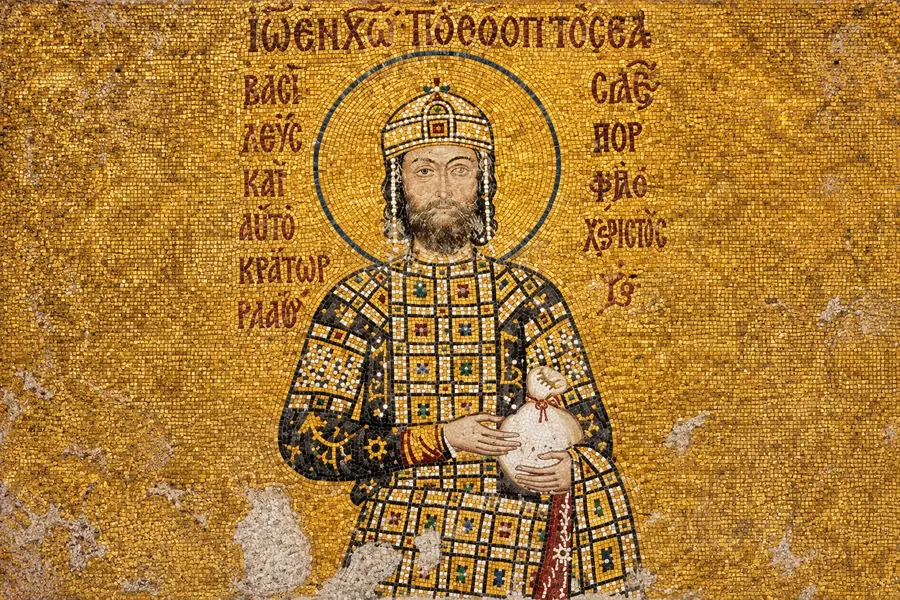
John II Komnenos was one of the most successful Byzantine emperors of the Komnenian dynasty. Ruling from 1118 to 1143, he spent much of his reign strengthening imperial authority, campaigning against the Seljuk Turks and attempting to restore Byzantine influence in Anatolia and the eastern Mediterranean. He was an experienced military leader who personally accompanied his armies on campaign. His death, however, resulted from an accident during a hunting expedition rather than a military engagement.
In 1143, while hunting wild boar in Cilicia, John accidentally injured his hand with an arrow from his own equipment. Some historical accounts describe the arrow as poisoned. The wound initially appeared relatively minor, and the emperor continued with his activities. However, the injury became increasingly inflamed. Despite attempts at treatment, his condition deteriorated. He eventually died on 8 April 1143, reportedly after developing a severe infection.
A modern medical study published in Acta Chirurgica Belgica examined the historical accounts and concluded that septicaemia caused by infection was a more likely explanation than poisoning. The authors noted that the delay between the injury and death was inconsistent with the immediate effects expected from a lethal arrow poison.
His death forced the Byzantine court to resolve the succession. John selected his younger son Manuel as his successor, who would go on to become one of the empire's most prominent rulers. For an emperor who had spent decades leading armies and surviving dangerous campaigns, a seemingly minor hunting injury proved fatal.
Source: Markatos et al., The Death of the Byzantine Emperor John II Komnenos (2018).
9. Martin I of Aragon - The King Who Laughed Himself to Death (1410 AD)
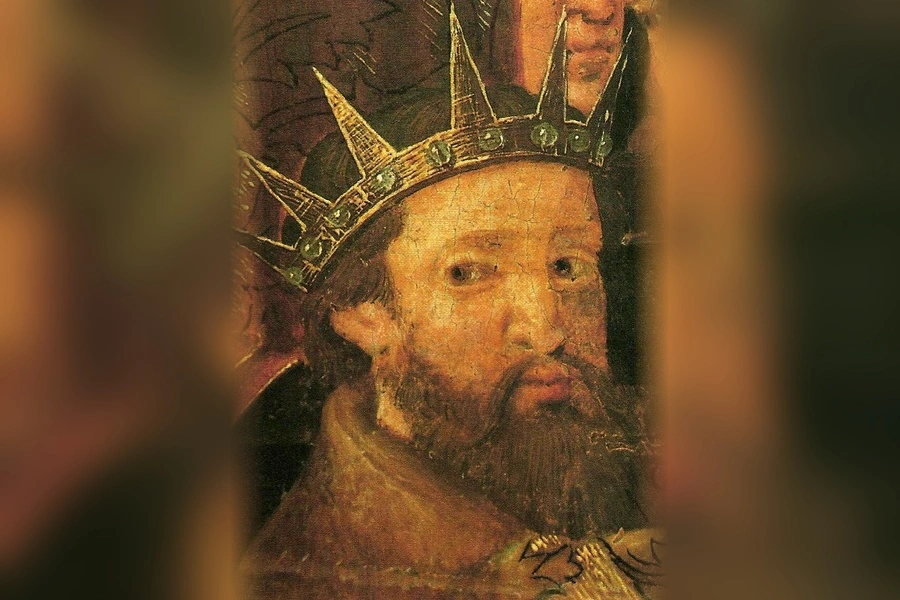
Could a king really laugh himself to death? According to a popular story about Martin I of Aragon, that is precisely what happened. Martin ruled the Crown of Aragon from 1396 until 1410. His reign was marked by political and dynastic challenges, and his death without a legitimate surviving heir eventually led to the Compromise of Caspe in 1412, through which a successor was selected. But the story surrounding his final moments is far more entertaining than the political consequences of his death.
According to a later anecdote, Martin was suffering from severe indigestion after eating an entire goose. While he lay in bed feeling unwell, his favourite jester, Borra, entered the room. When the king asked where he had been, Borra reportedly described seeing a young deer hanging upside down from a tree by its tail, supposedly as punishment for stealing figs. The absurd image made Martin laugh uncontrollably. The laughter supposedly became so intense that he died.
It is a wonderfully entertaining story, but its historical reliability is questionable. The exact circumstances of Martin's death are not firmly established, and the laughter anecdote appears in later accounts rather than dependable contemporary evidence. It should therefore be treated as a popular legend, not a confirmed medical explanation. Nevertheless, the story has endured because of its extraordinary contrast. A monarch surrounded by political responsibilities and royal ceremony supposedly met his end because of a joke told by a court entertainer.
Source: Historical study discussing the Martin I and Borra anecdote.
10. Qin Shi Huang - The Emperor Who May Have Poisoned Himself Seeking Immortality (210 BC)
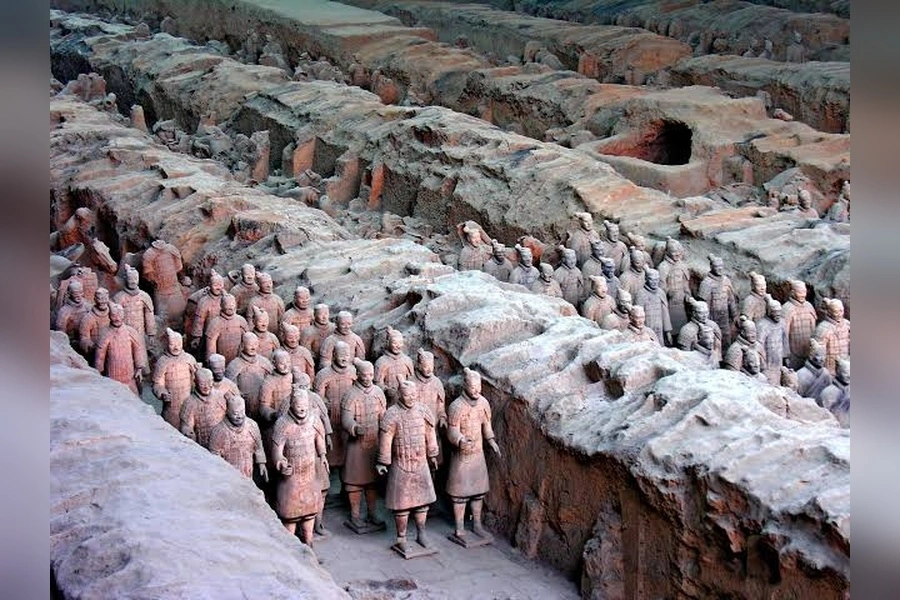
Qin Shi Huang achieved something that had eluded generations of Chinese rulers. He unified the Warring States and established the first centralised Chinese empire in 221 BC. His military campaigns, administrative reforms and standardisation policies transformed Chinese history. Yet the emperor who conquered rival kingdoms was deeply afraid of one enemy he could never defeat: death.
Qin Shi Huang became obsessed with discovering an elixir of immortality. He dispatched expeditions in search of mythical medicines and relied on court specialists who claimed to understand the secrets of extending human life. Among the substances associated with ancient Chinese immortality preparations was mercury, which was believed to possess remarkable properties.
In 210 BC, while travelling through eastern China, Qin Shi Huang fell seriously ill and died at Shaqiu. The historian Sima Qian records his death during this imperial journey. His remains were subsequently transported back to the capital, and his death was concealed from parts of the travelling court for a period. Historians have suggested that prolonged exposure to mercury-containing preparations may have contributed to his death. Mercury is highly toxic, and consuming it can cause severe damage to the nervous system, kidneys and other organs.
There is no conclusive medical evidence proving that mercury killed the emperor. However, scientific investigations of his mausoleum have detected unusually high mercury concentrations around the burial mound, supporting ancient descriptions of extensive mercury deposits within the tomb complex. These findings do not establish his cause of death, but they demonstrate the significance of mercury in his burial tradition. The irony is extraordinary. Qin Shi Huang built an empire that would outlast him for centuries and constructed an enormous mausoleum guarded by thousands of terracotta warriors. Yet his pursuit of eternal life may have hastened his own death.
Source: Scientific Reports - Mercury as a Geophysical Tracer Gas: Emissions from the Emperor Qin Tomb (2020).
Honourable Mention: Draco of Athens - Smothered by Gifts
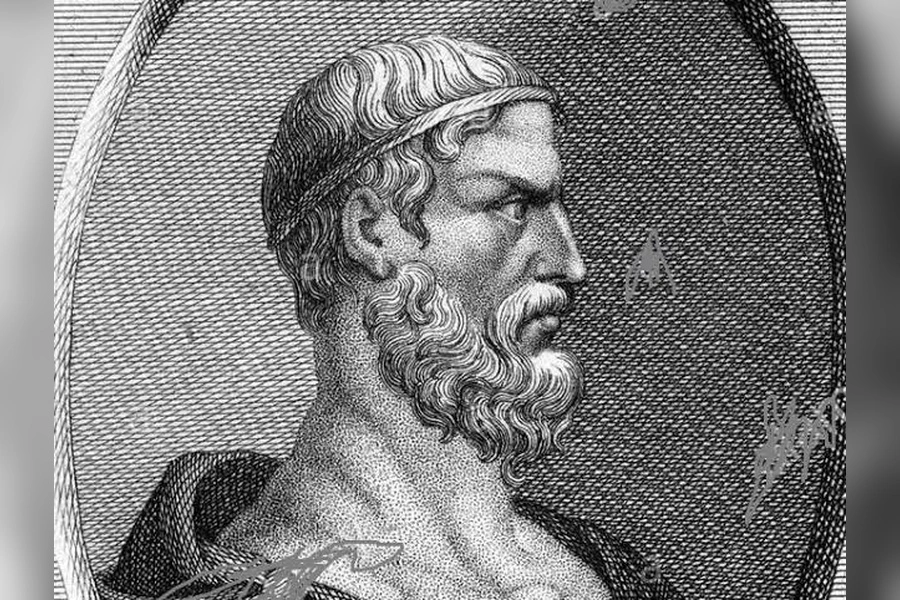
Draco was an ancient Athenian lawgiver remembered for introducing one of the earliest written legal codes in Athens, traditionally dated to around 621 BC. His laws were notoriously severe, with even relatively minor offences reportedly carrying the death penalty. The word 'draconian', meaning excessively harsh or severe, derives from his name. However, an unusual legend surrounds his death.
According to the Suda, a Byzantine encyclopaedia compiled around the 10th century AD, Draco travelled to the island of Aegina, where the local population welcomed him enthusiastically at a theatre. In a traditional display of appreciation, spectators supposedly threw hats, cloaks and other garments towards him. The gifts accumulated until Draco was buried beneath the enormous pile of clothing and suffocated.
There is no reliable contemporary evidence confirming this account. The story survives in a much later source and should be treated as legend. Nevertheless, it makes for a particularly amusing contrast: the lawgiver whose name became synonymous with harsh punishment supposedly died beneath an avalanche of gifts from admirers.
Source: Suda On Line - Entry on Draco.
Conclusion
History is full of rulers who built empires, commanded vast armies, and shaped the destinies of nations. Their achievements are usually remembered through great victories, political reforms and military campaigns. Yet their deaths remind us that power offers little protection against the unpredictable nature of life. Pyrrhus could defeat Roman armies but could not escape a falling roof tile. Sigurd the Mighty supposedly survived countless battles only to succumb to an infected wound caused by a dead enemy's tooth. Qin Shi Huang conquered China but may have died pursuing a potion that promised eternal life.
Some of these stories are supported by historical chronicles, while others have acquired legendary details over centuries of retelling. Their value lies not only in their entertainment but also in what they reveal about how different societies remembered their rulers. Sometimes, the strangest endings become the most enduring parts of a historical figure's legacy.
References and Further Reading
- Plutarch. Life of Pyrrhus, Chapter 34. Read the primary account.
- Letter on the Death of Emperor Frederick I (1190). Fordham University Medieval Sourcebook.
- Jordanes. Getica, Chapter XLIX. Read the account of Attila's death.
- Orkneyinga Saga. Account of Earl Sigurd and Máel Brigte. Read the saga.
- Zuo Zhuan. Duke Cheng, Year 10. Chinese Text Project.
- Chinese Text Project. Historical account of King Wu of Qin. Read the entry.
- Encyclopaedia Britannica. Louis III, King of West Francia. Read biography.
- Markatos, K., Papaioannou, A., Karamanou, M. and Androutsos, G. (2018). The death of the Byzantine Emperor John II Komnenos (1087-1143). Acta Chirurgica Belgica. Read the medical historical study.
- Aragón en la Edad Media. Historical discussion of the death of Martin I and the Borra anecdote. Read the study.
- Zhao, G. et al. (2020). Mercury as a Geophysical Tracer Gas - Emissions from the Emperor Qin Tomb in Xi'an Studied by Laser Radar. Scientific Reports. Read the research paper.
- Suda On Line. Entry on Draco of Athens, delta 1495. Read the translated entry.
Related Articles

Frequently Asked Questions
Which famous king was killed by a roof tile thrown by an old woman?
Pyrrhus of Epirus, the Greek king and military commander, was reportedly killed in 272 BC during street fighting in Argos. According to the ancient historian Plutarch, an elderly woman watching from a rooftop threw a roof tile at him to protect her son. The tile struck Pyrrhus, stunning him and causing him to fall from his horse, where an enemy soldier subsequently killed him.
How did Frederick Barbarossa drown during the Third Crusade?
Frederick Barbarossa drowned in the Saleph River in Cilicia, present-day Turkey, on 10 June 1190 while leading his army towards the Holy Land. Historical accounts differ about the circumstances. One version describes him attempting to cross the river on horseback, with his heavy armour possibly preventing him from swimming after falling into the water. Another account says he had already crossed safely but drowned while bathing in the river.
Did Attila the Hun really die from a nosebleed on his wedding night?
According to the sixth-century historian Jordanes, Attila the Hun died in 453 AD after suffering a severe nosebleed during his wedding celebrations with Ildico. He reportedly fell asleep intoxicated and suffocated when blood flowed into his throat while he was lying on his back. Although this is the best-known historical account, the precise medical cause of his death remains uncertain.
Which Viking ruler supposedly died because of his dead enemy's tooth?
Sigurd the Mighty, a Norse earl associated with Viking expansion in northern Scotland, supposedly died from an infected wound caused by the protruding tooth of an enemy he had beheaded. According to the Orkneyinga Saga, Sigurd tied the severed head of Máel Brigte to his saddle as a trophy. The tooth repeatedly scraped against his leg while riding, eventually causing an infection that killed him. This account is preserved in medieval Norse tradition rather than independently verified historical evidence.
Which Chinese ruler drowned in a toilet after a prophecy about his death?
Duke Jing of Jin, an ancient Chinese ruler, reportedly drowned in a latrine pit in 581 BC. According to the Zuo Zhuan, a shaman had predicted that the duke would not live long enough to eat the next wheat harvest. After the harvest arrived, Duke Jing ordered the shaman executed to prove the prediction wrong. However, he fell into a latrine before eating the wheat, fulfilling the prophecy according to the traditional account.
Did Qin Shi Huang die from mercury poisoning while searching for immortality?
Qin Shi Huang, the first emperor of unified China, died in 210 BC during an imperial journey. He was obsessed with discovering an elixir of immortality and reportedly consumed preparations containing mercury, which ancient Chinese beliefs associated with longevity. Historians consider mercury poisoning a plausible explanation for his death, although there is no conclusive evidence establishing it as the cause. His pursuit of eternal life remains one of the most ironic episodes in ancient Chinese history.
Did Draco of Athens really die after being buried under gifts?
According to a later account preserved in the Byzantine Suda encyclopaedia, Draco of Athens died after spectators at a theatre showered him with hats, cloaks and other garments as a display of appreciation. The accumulated clothing supposedly suffocated him. Draco is remembered for introducing an exceptionally harsh legal code in ancient Athens, which gave rise to the modern word draconian. However, the story of his unusual death is considered legendary because there is no reliable contemporary evidence supporting it.
Add Comment