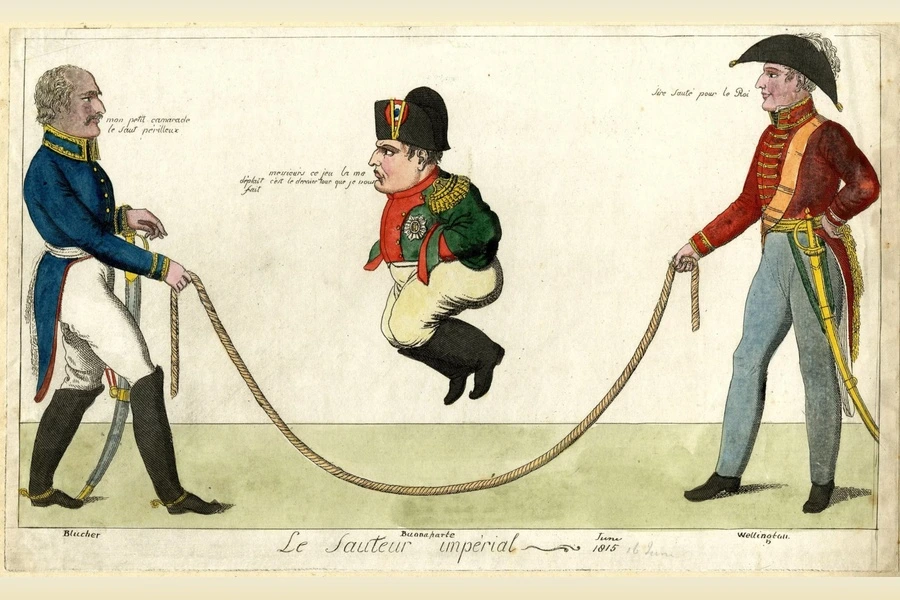
Napoleon Bonaparte conquered much of Europe, defeated powerful coalitions, and reshaped the continent's political landscape. Yet, centuries after his death, one image continues to overshadow his military achievements: that of a remarkably short, hot-tempered emperor who compensated for his lack of height with an oversized ego. But was Napoleon really as short as popular culture portrays him? The historical evidence tells a rather different story. Behind the familiar image lies a combination of British wartime propaganda, political caricatures and a misunderstanding of eighteenth-century French measurements. Napoleon was approximately 1.68 metres (5 feet 6 inches) by modern measurements, making him an ordinary-sized man for his generation, not the miniature tyrant depicted in British cartoons.
Table of Contents
- When Did the Rumour That Napoleon Was Short Begin?
- James Gillray: The Man Who Created Little Boney
- How Tall Was Napoleon Really?
- The Historical Evidence That Napoleon Was Not Exceptionally Short
- The French Measurement Confusion Explained
- Was Napoleon's Nickname Little Corporal About His Height?
- Why Did the British Want to Portray Napoleon as Short?
- Did the Propaganda Actually Work?
- How the Napoleon Short Myth Survived for Centuries
- The Verdict: Was Napoleon Really Short?
- References and Further Reading
When Did the Rumour That Napoleon Was Short Begin?
The image of Napoleon as an unusually short man became firmly established in Britain in 1803, when tensions between France and Britain escalated into renewed warfare. The person most responsible for popularising it was British political cartoonist James Gillray (1756-1815), whose satirical illustrations transformed Napoleon from a formidable military leader into a miniature, childish and perpetually furious figure. However, the origins of the nickname and the origins of the physical caricature are two different stories.
Napoleon had already acquired the affectionate nickname Le Petit Caporal (the Little Corporal) during his early military career. It was associated with his youth and the familiarity he developed with his soldiers. It was not necessarily a comment on his physical stature. When Napoleon rose to prominence during the French Revolutionary Wars, he was a young general commanding soldiers who were often considerably older and more experienced. The nickname reflected this relationship rather than an established reputation for being unusually short.
The British press, however, found the expression particularly useful. By turning an affectionate military nickname into a literal description of Napoleon's body, British propagandists could ridicule a man whose military achievements were becoming increasingly difficult to dismiss. According to the National Portrait Gallery in London, Gillray's distinctive Little Boney character first appeared on 1 January 1803. It was subsequently adopted by other caricaturists, establishing an image that would survive long after the Napoleonic Wars.
James Gillray: The Man Who Created Little Boney
James Gillray was among Britain's most influential political caricaturists. His illustrations regularly attacked politicians, monarchs, and public figures, using exaggerated physical features and absurd situations to communicate political messages. Napoleon became one of his favourite targets. Interestingly, Gillray did not initially portray Napoleon as particularly short. His earlier illustrations showed the French general with relatively normal proportions, although they often exaggerated his facial features and temperament.
The turning point came in March 1803, following a diplomatic confrontation between Napoleon and the British ambassador, Lord Whitworth, at the Tuileries Palace in Paris. Napoleon publicly criticised British policy and expressed his anger over Britain's conduct. The confrontation took place in front of numerous foreign diplomats, making it a particularly embarrassing diplomatic incident.
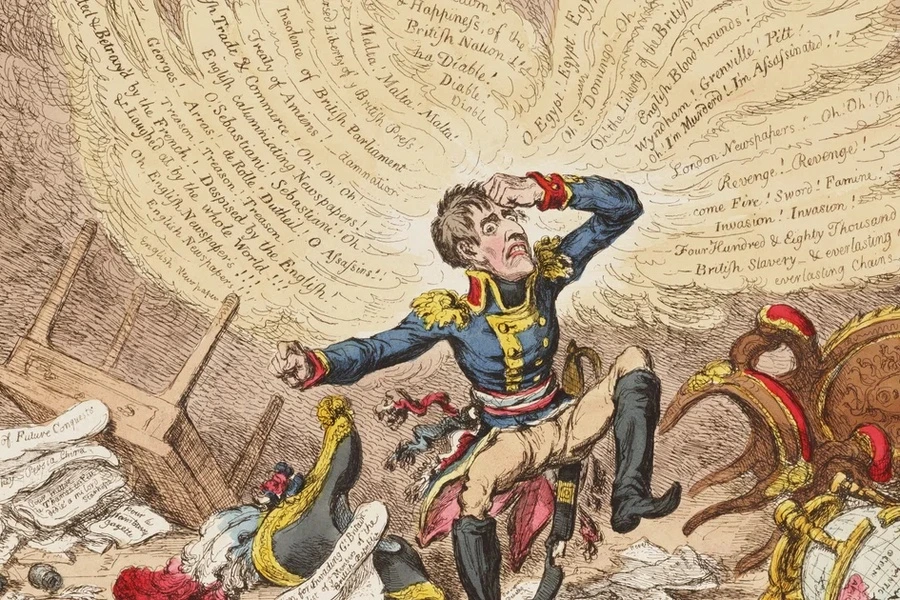
Gillray seized the opportunity. In May 1803, he published one of his most memorable cartoons, titled Maniac-raving's-or-Little Boney in a strong fit. It depicted Napoleon as a furious, miniature figure throwing a tantrum, surrounded by oversized furniture and papers. His enormous boots and oversized military hat made him appear almost childlike. The cartoon was not an attempt at realistic portraiture. It was a deliberate attempt to reduce the stature of a man whose political and military ambitions threatened Britain.
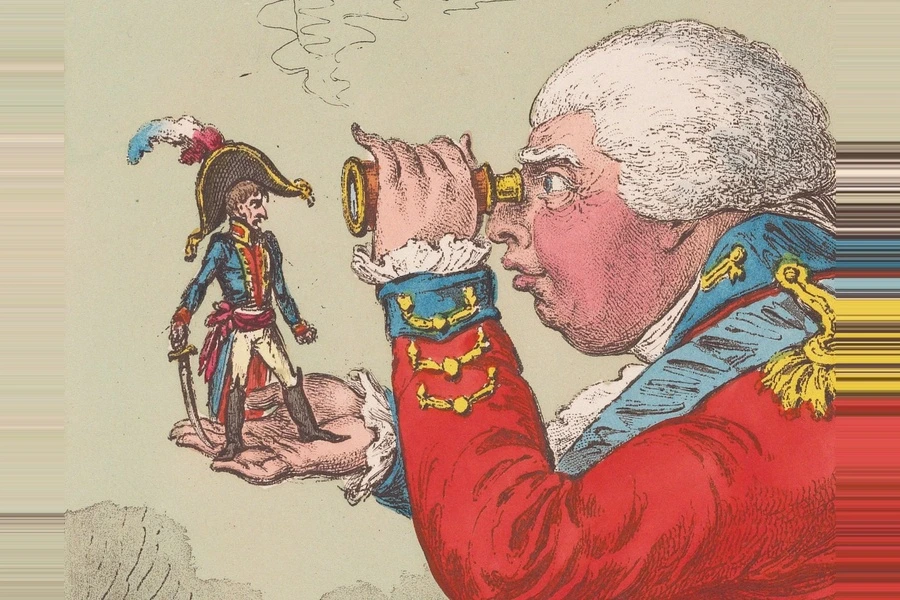
Another famous illustration, The King of Brobdingnag and Gulliver, published in March 1803, depicted King George III holding a tiny Napoleon in his hand and examining him through a telescope. The reference was to Jonathan Swift's Gulliver's Travels. In the story, Gulliver visits Brobdingnag, a land inhabited by giants. By portraying George III as a giant and Napoleon as a miniature visitor, Gillray reversed the political balance of power in a humorous but pointed fashion.
Napoleon, who aspired to dominate Europe, was reduced to a powerless little man in the palm of Britain's king. These illustrations were enormously influential. Other British cartoonists adopted the Little Boney character, repeatedly depicting Napoleon as a small, aggressive man with disproportionate ambitions. The National Portrait Gallery's collection of Gillray's Napoleon caricatures documents how this visual character developed and became a recurring feature of British political satire.
How Tall Was Napoleon Really?
Napoleon's actual height was approximately 1.68 metres (5 feet 6 inches), according to the historical measurements recorded around the time of his death. This is considerably different from the popular claim that he stood only 5 feet 2 inches tall.
The confusion originates from the fact that Napoleon's height was recorded using the French measurement system, which differed from the British system. His recorded height was approximately five French feet, two inches, and four lines. Converting this measurement into modern units gives approximately 168.6 centimetres. Napoleon was therefore not an exceptionally short man. In fact, he was around the average height of French men of his generation.
| Measurement | Historical figure |
|---|---|
| Recorded French measurement | 5 pieds, 2 pouces, 4 lignes |
| Modern metric equivalent | Approximately 168.6 cm |
| Modern imperial equivalent | Approximately 5 feet 6.4 inches |
| Average height of French men at the time | Approximately 160-165 cm, depending on the population and dataset |
Historical height comparisons should be treated carefully because averages varied according to region, social class, age, and the population being measured. Nevertheless, the available evidence places Napoleon comfortably within the normal range for men of his period. Thierry Lentz, a leading French historian of the Napoleonic era, addresses this question in his article Was Napoleon Small?, published by the Fondation Napoléon. He concludes that Napoleon's height was around 1.686 metres and that he was of average height for his time.
The Historical Evidence That Napoleon Was Not Exceptionally Short
Rather than relying on paintings or political cartoons, historians have several contemporary records that help establish Napoleon's actual height. Some of the most useful evidence comes from people who knew him personally and from measurements taken during his final days.
1. The measurement recorded after Napoleon's death
One of the strongest pieces of evidence comes from Napoleon's death on 5 May 1821 on the island of Saint Helena. Following his death, his personal physician, Francesco Antommarchi, participated in the examination of his body. According to the account preserved through the memoirs of his valet, Louis-Joseph Marchand, Napoleon's height was recorded as five French feet, two inches and four lines.
Using the historical French measurement system, this corresponds to approximately 1.686 metres. The calculation is particularly important because it provides a specific physical measurement rather than an impression based on appearance. Historian Marcel Dunan examined this evidence in his article La taille de Napoléon, published in the Revue de l'Institut Napoléon in 1963. He identified the measurement in Marchand's memoirs and explained the conversion into modern metric units.
2. An independent measurement by an Englishman
There is another particularly interesting piece of evidence from Napoleon's final years. Andrew Darling, an English upholsterer who worked on Saint Helena, was tasked with taking measurements associated with Napoleon's body and clothing. His journal recorded Napoleon's height as five feet and seven inches using English measurements. This converts to approximately 1.70 metres.
Although the measurement differs slightly from Antommarchi's record, both accounts place Napoleon well above the supposed 5 feet 2 inches of the popular myth. The significance of Darling's record is that it provides an independent measurement using the English system. It also makes it difficult to dismiss the French measurement as an isolated or deliberately flattering account. Marcel Dunan discusses both records in his research on Napoleon's height, concluding that the available measurements do not support a stature below 1.686 metres.
3. Contemporary eyewitness descriptions
Physical measurements are not the only available evidence. Several people who encountered Napoleon during his lifetime described his appearance in ways that challenge the caricature. One interesting example is John Leslie Foster, a young Englishman who attended a reception at the Tuileries Palace in April 1802, shortly after the Peace of Amiens. In a letter dated 6 April 1802, Foster estimated Napoleon's height at approximately five feet and seven inches.
This is particularly valuable because Foster was British and had no obvious reason to exaggerate Napoleon's stature. His account also predates the most influential Little Boney caricatures of 1803. Marcel Dunan reproduces this testimony in his research published by the Fondation Napoléon. These contemporary descriptions are not precise scientific measurements, but they reinforce the conclusion drawn from the physical records.
4. Napoleon's height compared with ordinary French soldiers
Another useful way of assessing Napoleon's stature is to compare him with the soldiers he commanded. According to Thierry Lentz, the average height of a Frenchman during this period was approximately 1.60 metres, while infantry recruits generally measured between 1.65 and 1.69 metres. At approximately 1.686 metres, Napoleon was therefore within the normal range for French infantrymen and taller than the broader average cited in this historical comparison. These figures refer to different populations and should not be treated as directly interchangeable. Military recruits were subject to physical selection, while the broader population included men of different ages, regions and social backgrounds.
He was certainly not an unusually short man by the standards of his generation. For a ruler who regularly appeared alongside senior officers and soldiers, however, being average-sized did not necessarily mean looking impressive. That distinction would become important in the development of the propaganda surrounding his appearance.
The French Measurement Confusion Explained
One of the most persistent explanations for the Napoleon height myth involves the difference between French and British units of measurement. Before the widespread adoption of the metric system, France used traditional units such as the pied (foot), pouce (inch), and ligne. These were not identical to their British equivalents.
A French foot measured approximately 32.48 centimetres, compared with the British foot of 30.48 centimetres. Similarly, a French inch measured approximately 2.706 centimetres, while a British inch measured 2.54 centimetres. Consequently, five French feet and two French inches could not be interpreted as five British feet and two British inches. Here is how the conversion works:
- Five French feet = approximately 162.4 cm.
- Two French inches = approximately 5.4 cm.
- Four French lines = approximately 0.9 cm.
- Total = approximately 168.6 cm.
Someone unfamiliar with the French system could easily mistake the recorded measurement for just 5 feet 2 inches in modern British or American units. That would produce a figure of approximately 157.5 centimetres, making Napoleon appear considerably shorter than he actually was.
It is important, however, not to treat this conversion error as the original cause of the propaganda. Gillray's Little Boney caricatures appeared in 1803, whereas the measurement from Antommarchi's examination was recorded in 1821. The measurement confusion helps explain why the myth was subsequently reinforced, but it cannot explain the initial creation of the caricature.
Was Napoleon's Nickname Little Corporal About His Height?
Another reason the Napoleon height myth has proved so persistent is his famous nickname, Le Petit Caporal, or the Little Corporal. At first glance, it seems to support the argument that Napoleon was physically short. However, historians have questioned this interpretation. Napoleon was a young officer who rose rapidly through the ranks during the French Revolutionary Wars. His soldiers often viewed him with a mixture of admiration, affection and familiarity.
The nickname reflected this relationship. He was young compared with many of the veterans serving under him, and the expression carried a sense of affection rather than ridicule. Michael Broers, an Oxford historian and biographer of Napoleon, has explained that the nickname was connected with Napoleon being the new, young man among older and more experienced soldiers.
It is therefore misleading to use the nickname as evidence of his physical height. There is also an interesting contrast between Napoleon's nickname and the image promoted by British cartoonists. What had begun as an affectionate expression among his own soldiers was transformed into a political insult by his enemies.
Why Did the British Want to Portray Napoleon as Short?
British propaganda was not simply interested in making Napoleon look physically unattractive. Its larger objective was to undermine his authority, ridicule his ambitions, and reduce the fear surrounding his growing power. By the beginning of the nineteenth century, Napoleon had become one of the most formidable political and military figures in Europe.
His victories in Italy, particularly at Marengo in 1800, had strengthened his reputation. His subsequent political rise and coronation as Emperor of the French in 1804 made him an even greater threat to the established European powers. For Britain, which viewed French expansion as a serious threat to its security and European balance of power, Napoleon was both a military opponent and a propaganda target.
1. Turning a powerful enemy into a ridiculous figure
Napoleon's greatest advantage was his reputation. His victories and reputation for military brilliance created an image of an almost unstoppable commander. British caricaturists attempted to reverse this perception by presenting him as a ridiculous, angry and physically insignificant individual.
Instead of depicting a formidable emperor, Gillray showed a miniature man throwing tantrums and making grandiose demands. The contrast was deliberate. A ruler who could intimidate kings and defeat armies was made to look like a child who could not control his temper.
2. Undermining Napoleon's military ambitions
In 1803, Britain faced the possibility of a French invasion across the English Channel. Napoleon assembled a substantial invasion force around Boulogne, creating considerable anxiety among the British public. The proposed invasion was a genuine strategic threat, even though it was never carried out. British cartoons used humour to reduce this fear and portray Napoleon's ambitions as absurd.
In The King of Brobdingnag and Gulliver, the French leader is reduced to a tiny figure in the hands of George III. The message was unmistakable. Britain would not be intimidated by the ambitions of a supposedly insignificant man. The cartoons helped turn national anxiety into ridicule, allowing the British public to laugh at a threat that otherwise appeared formidable.
3. Attacking Napoleon's personality
Napoleon's occasional public outbursts provided his opponents with additional material. The confrontation with Lord Whitworth in March 1803 was particularly useful because it could be portrayed as evidence of arrogance, instability and poor self-control.
Gillray combined these incidents with the miniature Napoleon character, suggesting that the French leader possessed enormous ambitions but the temperament of a spoiled child. This was a form of psychological warfare. The objective was not necessarily to convince everyone that Napoleon was literally short, but to make him appear less respectable and less deserving of admiration.
Did the Propaganda Actually Work?
British caricatures were undoubtedly successful in establishing a lasting image of Napoleon as a small and aggressive man. However, whether they achieved their broader political and military objectives is a different question. There is evidence that Napoleon was deeply irritated by the British press and its treatment of him.
According to the historical account discussed by historian Una McIlvenna in HISTORY, Napoleon sent diplomatic communications demanding that the British government restrain or censor hostile newspapers and caricatures. The British government ignored these demands. This reaction is revealing. Napoleon understood that political reputation was important and recognised the influence that satire could have on public opinion. However, the propaganda did not significantly weaken his military position during his years of greatest success. Consider the following:
| Period | Napoleon's position | Effect of British propaganda |
|---|---|---|
| 1803 | Preparing for a possible invasion of Britain | British cartoons ridiculed his ambitions and personality. |
| 1805 | Victorious at Austerlitz | His military reputation remained formidable despite hostile satire. |
| 1806-1807 | Victories at Jena-Auerstedt and Friedland | British caricatures continued to mock his ambitions and authority. |
| 1812 | Invasion of Russia ended in disaster | His military failures provided fresh material for his critics. |
| 1815 | Defeated at Waterloo | His final defeat became another opportunity for political ridicule. |
The most important point is that British satire did not prevent Napoleon from winning major military victories or exercising enormous political influence. His defeat came from much more substantial factors, including military overextension, the disastrous Russian campaign, resistance from European powers and the eventual formation of a powerful coalition against France.
His defeat at Waterloo in 1815 was the culmination of military and political circumstances, not the result of caricatures questioning his height. Nevertheless, the propaganda achieved something more enduring than an immediate military advantage: it helped create a cultural image that survived long after Napoleon's empire disappeared.
How the Napoleon Short Myth Survived for Centuries
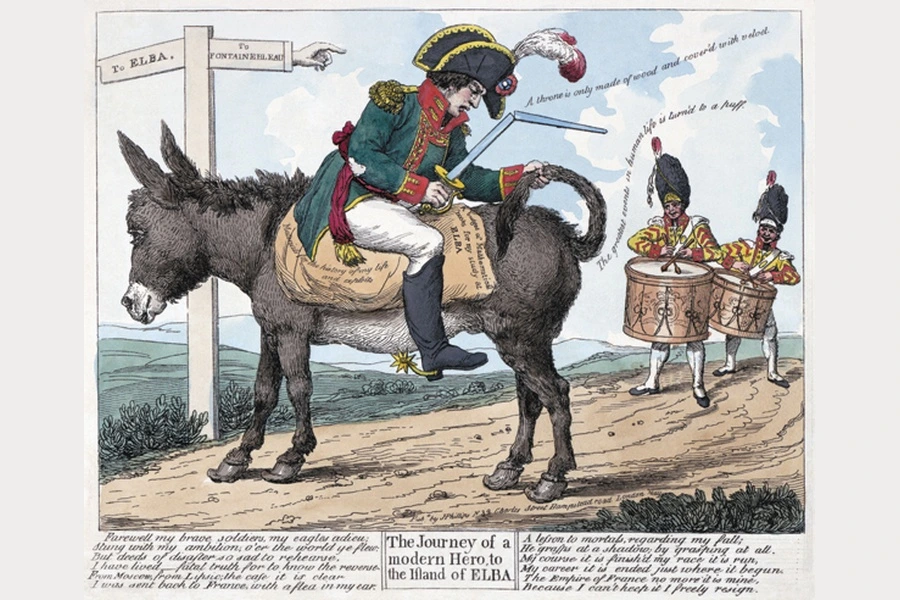
The remarkable thing about the Napoleon height myth is not that it originated in wartime propaganda, but that it continued to influence popular culture long after the political circumstances that created it had disappeared. Gillray's caricatures were copied, reproduced, and adapted by other artists. Over time, the image of Little Boney became inseparable from Napoleon's public identity in the English-speaking world.
The nickname Napoleon Complex eventually emerged from this association. It describes the popular stereotype that a short man compensates for his physical stature through aggression, arrogance or an excessive desire for power. There is, however, no convincing historical evidence that Napoleon's military ambitions were motivated by insecurity about his height. His ambition, political calculations and military decisions need to be understood in the context of the French Revolution, European power politics and his personal pursuit of authority.
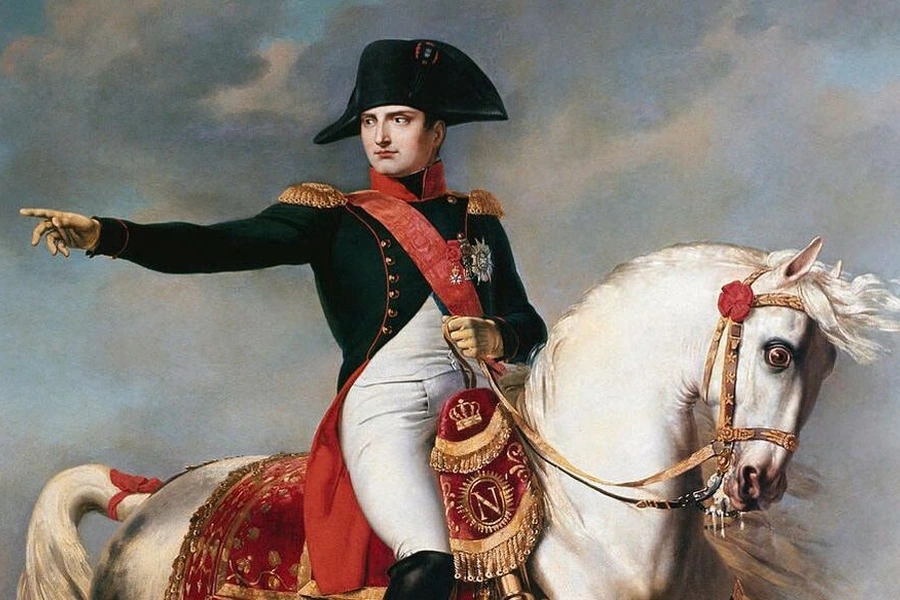
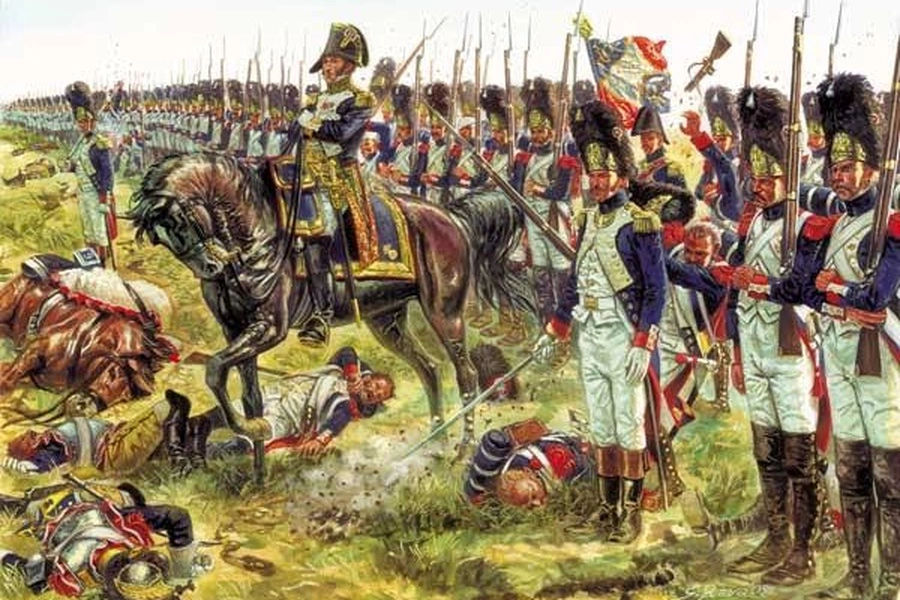
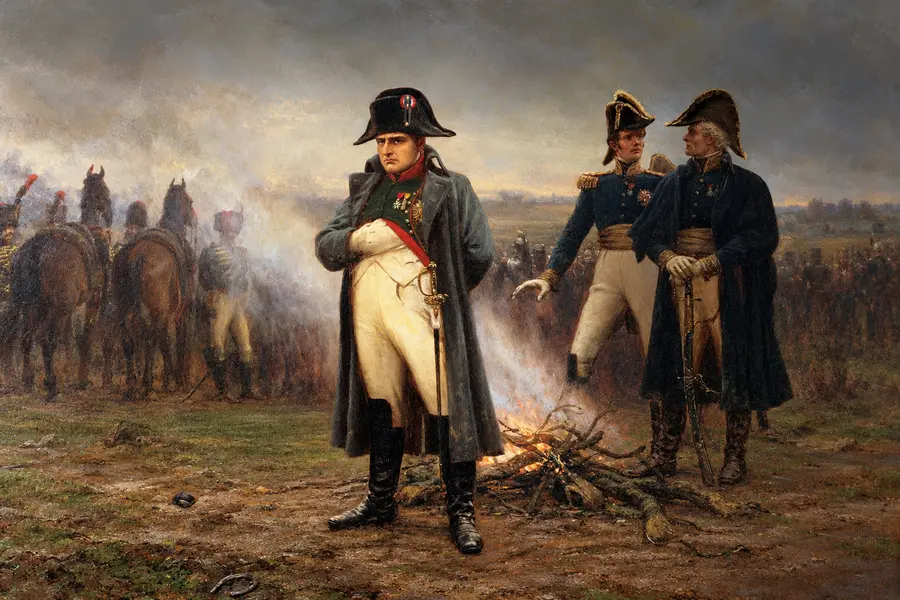
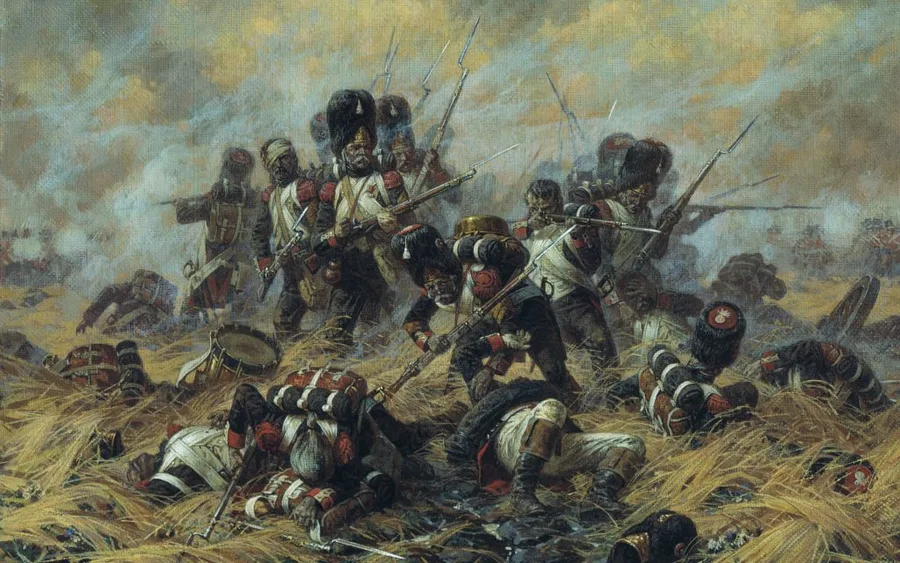
Napoleon frequently appeared alongside the imposing soldiers of his Imperial Guard. These men were selected partly for their physical stature, with the Old Guard grenadiers generally standing considerably taller than the average Frenchman. Their bearskin headgear and elaborate uniforms made them look even more imposing. Napoleon, who generally wore a relatively simple uniform and his familiar bicorne hat, could appear considerably smaller in comparison.
His portraits and paintings often reinforced this visual contrast. In reality, the difference was largely one of perspective and company rather than evidence that Napoleon was exceptionally short. It is an interesting example of how political imagery can outlive the political conflict that created it. Napoleon's military legacy remains the subject of serious historical debate, from his victories at Austerlitz and Marengo to his final defeat at Waterloo. Yet the image of Little Boney remains one of the most recognisable aspects of his popular identity.
The Verdict: Was Napoleon Really Short?
Napoleon Bonaparte was not the exceptionally short man portrayed in British propaganda. Measurements recorded after his death, independent observations by English witnesses, and comparisons with the average height of French men during his lifetime all support this conclusion. The myth emerged primarily through British political satire, particularly the work of James Gillray, who transformed an affectionate military nickname into a powerful visual insult. By portraying Napoleon as a miniature, childish, and aggressive figure, British cartoonists attempted to undermine his authority and make his ambitions appear ridiculous.
In the short term, the caricatures irritated Napoleon and helped shape British public perceptions of their most formidable enemy. They did not, however, prevent his military victories or bring about the collapse of his empire. Ultimately, the story of Napoleon's height offers a fascinating lesson about the power of propaganda. A fictional image, repeated often enough, can become more familiar than the historical evidence itself.
References and Further Reading
- Fondation Napoléon - Thierry Lentz. Was Napoleon Small? A historical examination of Napoleon's height, contemporary averages, and the physical appearance of the emperor.
- Fondation Napoléon - Marcel Dunan. La taille de Napoléon. Discusses the measurements recorded by Antommarchi, Andrew Darling and contemporary eyewitnesses, including the historical French measurement system.
- National Portrait Gallery, London. Gillray Caricatures: Napoleon. An institutional collection documenting the development of James Gillray's Little Boney caricatures.
- HISTORY - Una McIlvenna. Was Napoleon Short? Origins of the Napoleon Complex. Examines the origins of the Napoleon height myth, the British caricatures, and the relationship between Napoleon's recorded height and the French measurement system.
- The Washington Post - Dave Kindy. Napoleon complex? The 'little corporal' was actually taller than average. Includes historical commentary from Oxford historian Michael Broers on Napoleon's height, nickname and the origins of the caricature.
- National Geographic. Was Napoleon even short? Inside the history of discrimination against short men. Examines the historical height controversy and the role of British political caricatures.
Books and Memorables
This article may contain affiliate links. If you purchase through these links, I may earn a small commission at no extra cost to you.


Related Articles
Frequently Asked Questions
How tall was Napoleon Bonaparte in centimetres and feet?
Napoleon Bonaparte was approximately 168.6 centimetres tall, equivalent to around 5 feet 6 inches. His height was recorded as five French feet, two inches and four lines. Because historical French measurements were longer than their British equivalents, his recorded height is sometimes incorrectly interpreted as 5 feet 2 inches.
Why was Napoleon called the Little Corporal?
Napoleon was nicknamed Le Petit Caporal, meaning the Little Corporal, during his early military career. The nickname reflected the affection and familiarity he shared with his soldiers, particularly because he was a relatively young commander among older and more experienced veterans. It was not necessarily a reference to his physical height.
Who started the Napoleon short height myth?
British political cartoonist James Gillray played a major role in popularising the myth that Napoleon was exceptionally short. Beginning in 1803, Gillray published caricatures depicting Napoleon as a miniature, angry and childish figure. His illustrations transformed the affectionate nickname Little Corporal into a political insult that became widely recognised in Britain.
What is the difference between French and British feet in Napoleon's height measurement?
The traditional French foot measured approximately 32.48 centimetres, whereas the British foot measured 30.48 centimetres. Napoleon's recorded height of five French feet, two inches and four lines therefore converts to approximately 168.6 centimetres or 5 feet 6 inches. Confusing the two measurement systems helped perpetuate the belief that Napoleon was only 5 feet 2 inches tall.
What was James Gillray's King of Brobdingnag and Gulliver cartoon about?
James Gillray's 1803 cartoon The King of Brobdingnag and Gulliver portrayed King George III holding a miniature Napoleon in his hand and examining him through a telescope. Inspired by Jonathan Swift's Gulliver's Travels, the illustration mocked Napoleon's ambitions by making him appear physically insignificant beside the British monarch. It was an example of British political propaganda during the Napoleonic Wars.
Did British propaganda about Napoleon's height affect his military reputation?
British caricatures successfully ridiculed Napoleon and helped establish the image of Little Boney in popular culture. Napoleon reportedly disliked the hostile press coverage and attempts to mock his appearance. However, there is little evidence that the height propaganda significantly damaged his military reputation or influenced the outcome of his campaigns. His eventual downfall resulted from military overextension, the disastrous Russian invasion of 1812 and the coalitions formed against France.
Add Comment